


Colour Fastness in Apparel Export: What the Tests Measure, and Where Production Loses It
Knowledge Article | Apparel Quality Control, Testing and Export Compliance | 2026
A garment can pass every measurement check and still fail at the first wash. Colour fastness is the property that decides whether the colour a buyer approved in the lab dip is still there after laundering, rubbing, light and perspiration. It is one of the most frequently claimed defects in apparel export, and unlike a measurement error it cannot be corrected by rework: once colour has moved, the goods become either second-quality stock or a return. Understanding what the tests measure - and where production quietly loses the property - is among the most useful technical knowledge a merchandiser or QC can hold.
What Colour Fastness Actually Measures
Colour fastness is not one property but a family of them, and the mechanism is always the same: how strongly dye is bound to fibre, and whether it can escape under a given stress. The stress may be water and detergent (washing), mechanical friction (crocking), light energy (photodegradation), acid or alkaline perspiration, heat and pressure (sublimation and ironing), or dry-cleaning solvent. When dye escapes, two things are graded: the colour change of the specimen itself, and the staining of adjacent fabric that absorbed the dye. A garment that fades without staining still fails; a garment that keeps its own colour but bleeds into a white lining fails as well. Both are commercial failures.
Why It Matters Commercially
In export programmes, colour fastness is a specification, not an opinion. Buyers write it into the tech pack and the test protocol; retailers translate it into restricted substance lists and care labelling; importers use it to answer consumer complaints. When it fails, the cost arrives three times: the test is repeated at the factory's expense, the goods are held or reworked, and the claim lands after the retailer has already sold the item. A navy jacket that stains a customer's white shirt produces a return, a refund, a chargeback and a shop-floor complaint - and the next order usually goes to a supplier whose test reports were cleaner.
There is also an asymmetry worth recognising: fastness testing is cheap, discovering failure late is expensive. One full panel on a bulk lot costs a fraction of a single chargeback deduction, which is why mature buyers ask for lot-level reports rather than sample certificates.
The Test Family: Which Test for Which Risk
Most export specifications are built from the same core group of methods:
Washing (ISO 105-C06, AATCC 61):colour change and staining after domestic or commercial laundering, read against a multi-fibre adjacent strip.
Crocking or rubbing (ISO 105-X12, AATCC 8): dry and wet rubbing with standard white cloth; wet crocking is the usual failure in dark, pigment-printed and indigo goods.
Light (ISO 105-B02, AATCC 16): fading after controlled exposure, critical for outerwear, swimwear and window-displayed product.
Perspiration and water (ISO 105-E04, E01):change and staining under alkaline and acidic sweat, critical for linings, collars and babywear.
Heat, sublimation and hot pressing:relevant to polyester, disperse dyes and dark shells paired with pale linings.
Dry cleaning (ISO 105-D01): sfor coats and suits whose care label says dry clean only.
Methods are not interchangeable. ISO and AATCC tests differ in equipment, times, temperatures and sometimes adjacent fabric, so a result quoted without a method number is close to meaningless. Where a buyer names a protocol, test that protocol; re-testing on a friendlier method and reporting the better number is the fastest route to a rejected shipment.
Reading the Grading Scale
Results are graded against grey scales from 1 to 5 in half steps, 5 meaning no visible change and 1 severe change. Two scales exist, one for colour change and one for staining, both read in a standard light cabinet under D65 and other specified illuminants. Common apparel specifications call for colour change of 4 or better and staining of 3-4 after washing, dry crocking of 4, wet crocking of 3, light fastness of 4, and perspiration of 3-4. Half a grade matters: a 3-4 read as 3 can turn an approved bulk into a rejected lot, so reports must be read against the buyer's requirement, not against an impression of "acceptable".
Requirements Differ by Market and by Component
Specifications are market-specific: European buyers quote ISO methods plus OEKO-TEX or their own restricted substance limits; North American buyers quote AATCC plus CPSIA for children's product; Japanese buyers often require JIS methods with stricter light fastness. Product type matters too - babywear is tested for saliva and perspiration, workwear for industrial laundering, swimwear for chlorinated water, down jackets for shell, lining and down-proof fabric separately. The mistake to avoid is writing a generic "grade 4" in the comment box and assuming it covers every component.
Root Causes in Production
Dye selection for the fibre and the depth of shade - reactive on cotton, disperse on polyester, acid on nylon - and whether the dye class suits the darkness required.
Insufficient washing-off and soaping after dyeing, leaving unfixed dye on the surface: the single most common cause of poor washing and wet-crocking results.
Fixation and pH control, where reactive dyeing at the wrong pH or with too little alkali leaves dye loosely bound to the fibre.
Water hardness and electrolyte levels, which change dye uptake and can produce bronzing on dark shades.
Binder curing in pigment printing: under-cured binder fails crocking immediately, and the defect only appears after pressing or wear.
Mechanical finishing such as brushing and raising, which lifts loose fibre and dye to the surface where rubbing reaches it.
Trims and components - zip tape, elastic, lining, embroidery thread, printed labels - dyed or supplied to a different standard from the shell.
Where It Fails in Real Programmes
In outerwear, the classic failure is a dark shell with a pale lining. The shell passes its own test, the lining passes its own test, but the assembled garment, wetted in transit or worn against a white shirt, transfers colour. The same pattern appears with navy nylon against polyester taffeta, indigo denim against white pocket bags, pigment-printed panels against light rib trims, and elastic or zip tape bought to a price rather than a specification. Storage is another silent route: goods packed damp, or sealed in plastic in humid warehouses, let dye and plasticiser migrate, and the failure surfaces weeks later at a distribution centre, far from any laboratory.
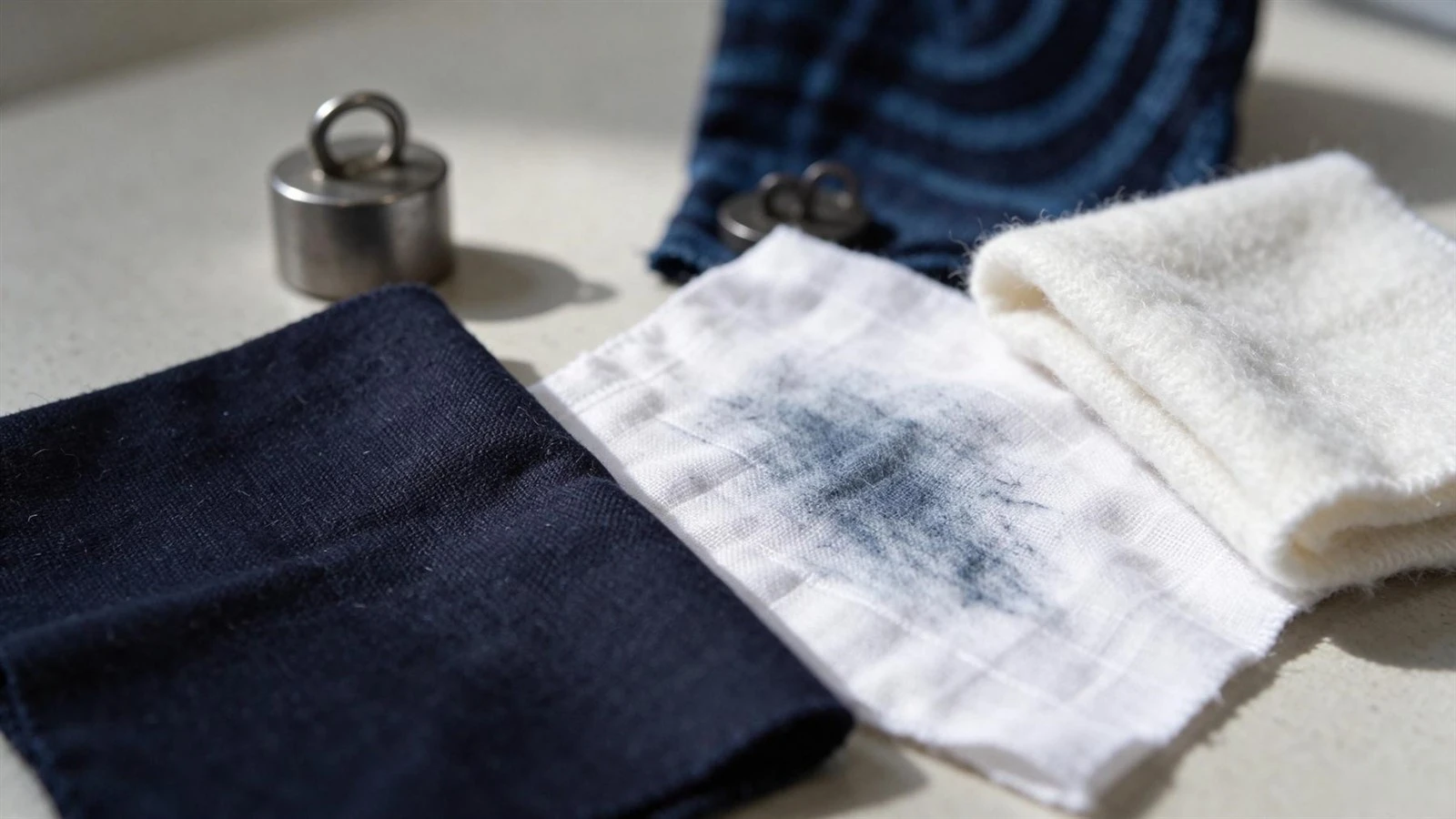
Figure 1 Wet crocking failure: the dark shell keeps its own colour, but the white rubbing cloth shows exactly the stain a consumer would find on a shirt or a bag.
Prevention: Four Places That Decide the Result
Approve the dye recipe, not only the shade. For dark shades, ask for the soaping, fixation and pH route in writing, and keep it in the lot file.
Test at bulk arrival, not only at sample stage. A lab dip that passes says nothing about a 3,000-metre dye lot with a different water supply.
Test the assembly, not only the components: shell plus lining plus trims, wetted and rubbed the way the consumer will use them.
Control finishing and packing: cure binder at the specified temperature, dry goods before bagging, and store away from heat and humidity.
One more habit is worth building: retain a swatch of every dye lot with its test report. A claim that arrives six months after shipment is answered with documents and retained samples, not with recollection, and the supplier who can produce both usually settles the discussion in a single exchange.
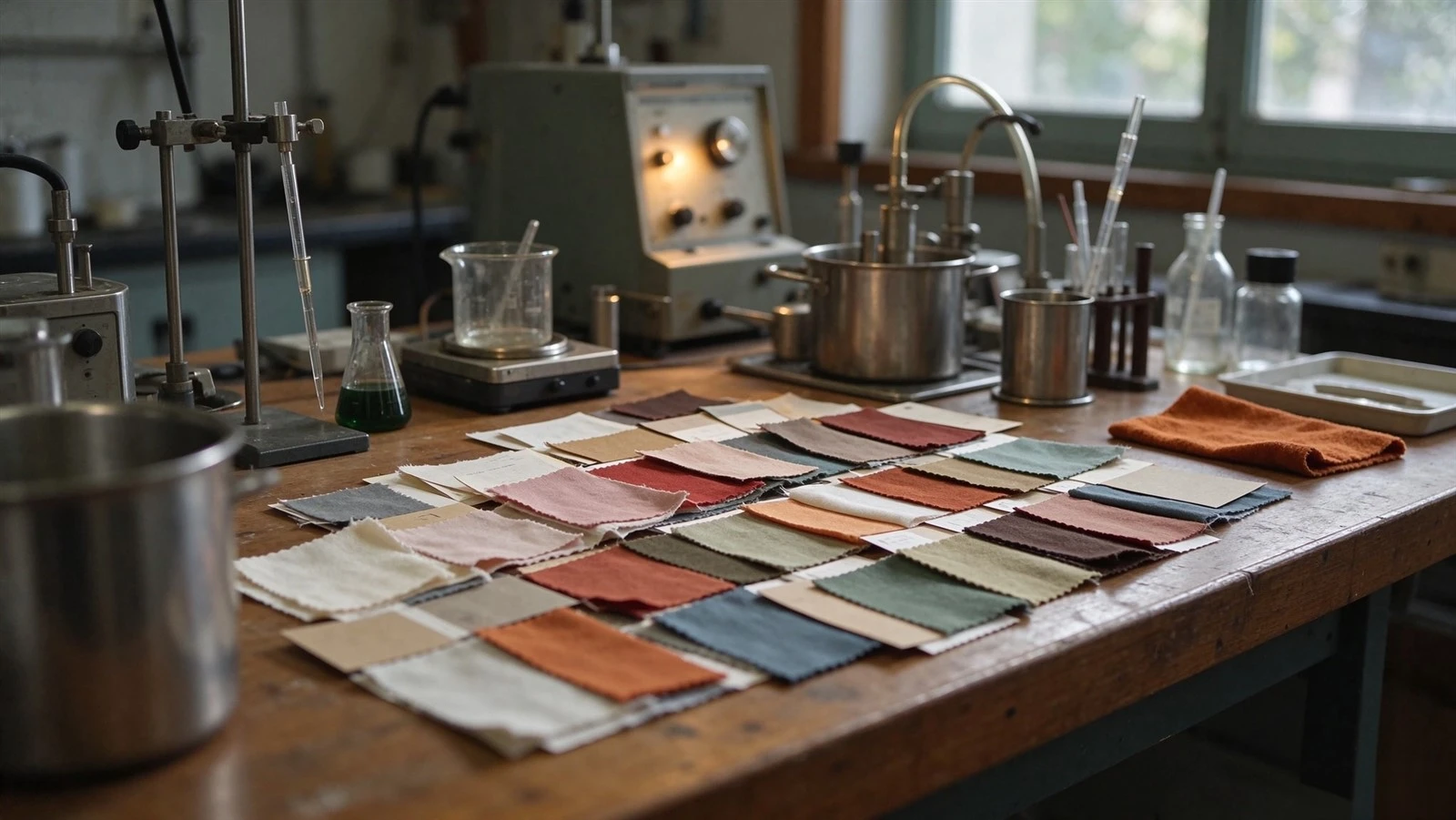
Figure 2 Lab dips and shade cards: the colour approved here is only the starting point - bulk dyeing, soaping and fixation decide whether it survives the wash.
Testing Workflow and Paperwork
A workable workflow runs in three gates. At development, the nominated fabric is tested against the full protocol and the result is written into the tech pack. At bulk, each dye lot is tested for washing, crocking and - where shades are dark or the garment sits next to white - staining, with the report filed against the lot number. Before shipment, a garment-level check on the assembled piece covers the components the fabric tests could not. Reports should come from a laboratory acceptable to the buyer, stating method numbers, illuminants, adjacent fabric and the grey scale used; a report that says only "passed" is not evidence. Where OEKO-TEX or a restricted substance declaration is required, the certificate number and validity date belong in the shipment file next to the test report.
When a Claim Arrives
Claims are won or lost on documentation and speed. The first move is to retrieve the retained sample of the disputed lot and retest it against the buyer's method, not against a more convenient one. If the retest reproduces the failure, the root cause is investigated in the dyehouse - recipe, soaping, fixation, water quality - rather than in the sewing room, and the corrective action is written into the next lot's process sheet. If the retest passes, the conversation moves to storage, transit and consumer washing behaviour, where a review of packing and care labelling usually finds the answer. Either way, the reply should arrive within days and carry the test data: a supplier who answers a colour claim with an explanation but no numbers rarely keeps the account.
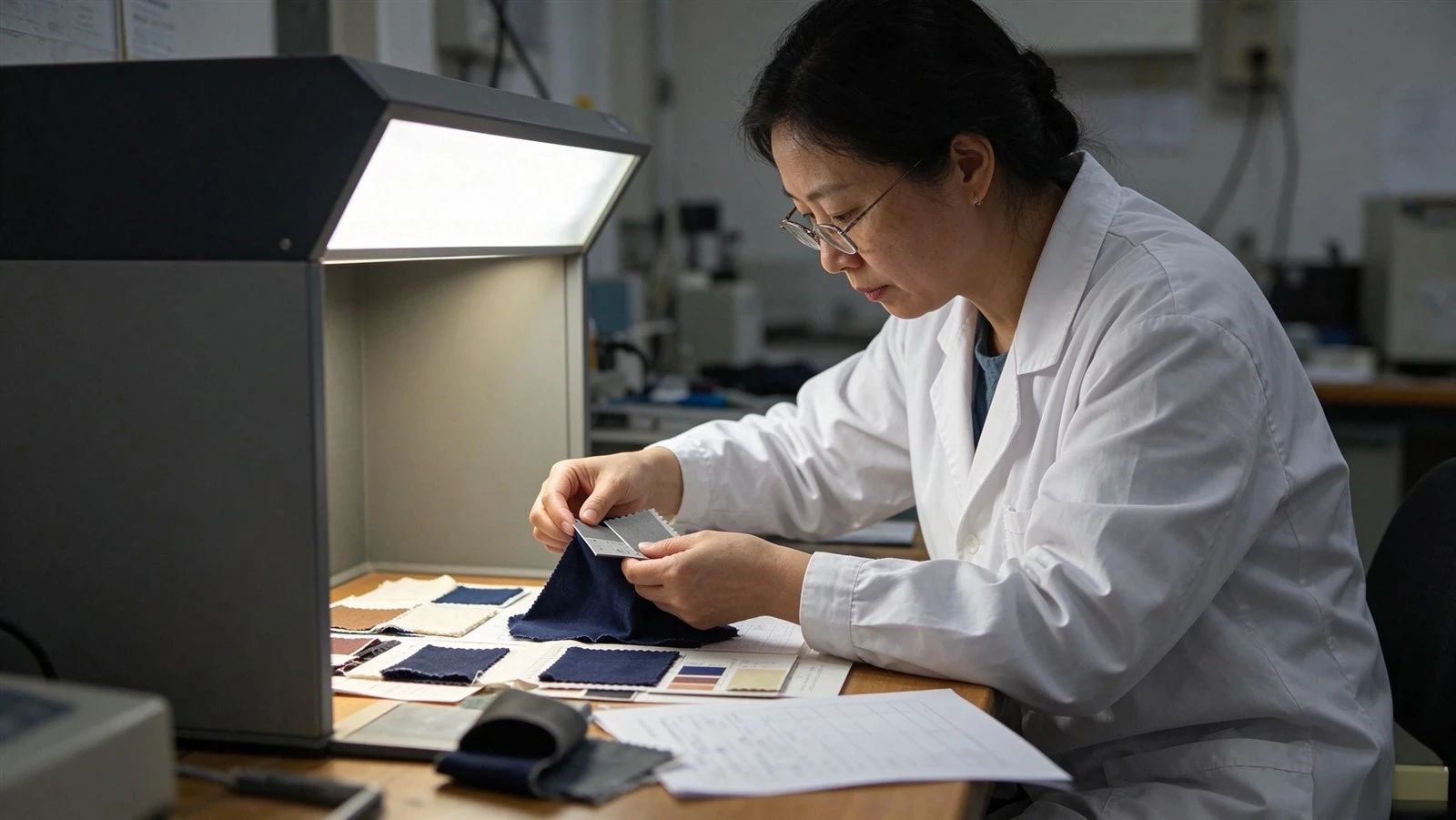
Figure 3 Grading in a standard light cabinet: grey-scale assessment is a measurement, and it has to be made under the illuminant the buyer specified.
Colour fastness is one of the few quality properties that cannot be inspected into a garment at the end of the line. It is decided in the dyehouse, confirmed in the laboratory, and lost in storage, packing or the customer's washing machine. For exporters, the practical conclusion is short: write the requirement into the tech pack with method numbers, test every dye lot rather than every sample, test the assembled garment, and keep the paperwork. Colour that stays is not an aesthetic preference - it is a commercial promise, and it is much cheaper to test than to explain.